
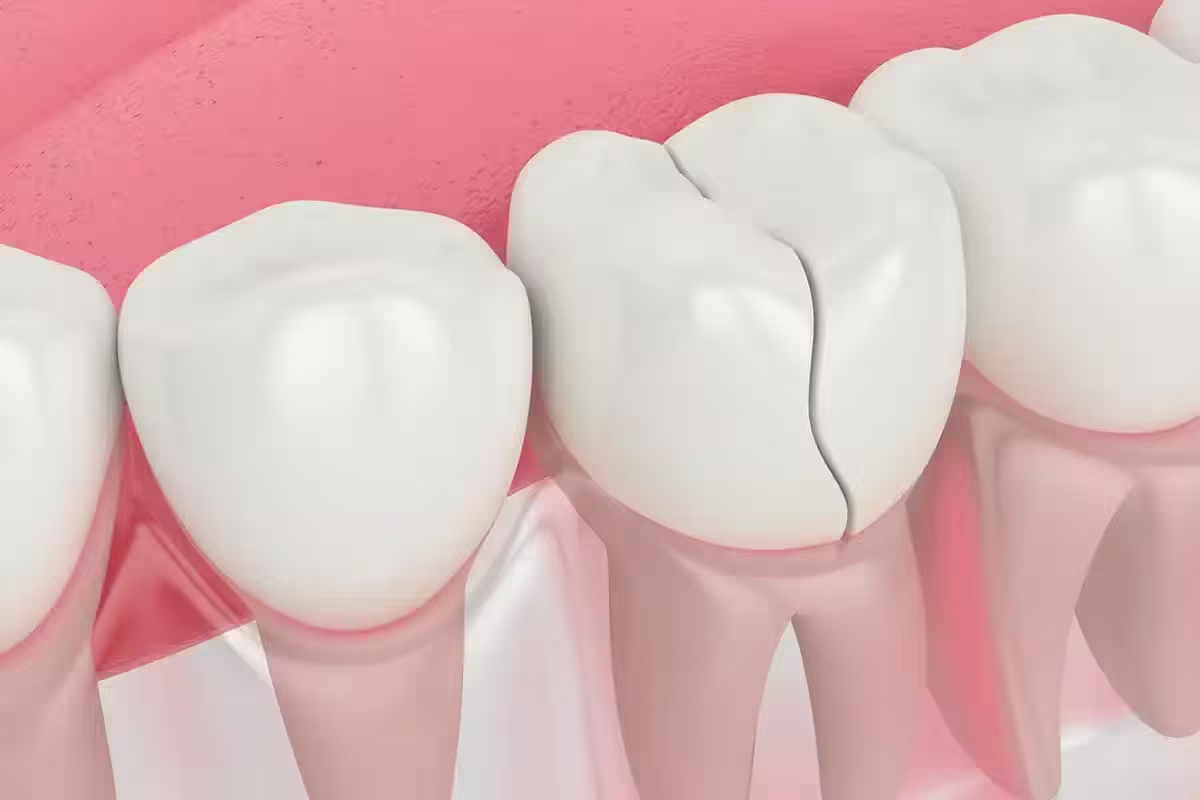
When you experience pain in your mouth, and you can’t pinpoint exactly what is causing the pain, it is one of the most annoying dental experiences. You may experience discomfort when biting down, sharp jolts with hot or cold drinks, or otherwise may experience pain, which comes and goes, but a routine check-up or an X-ray does not reveal an apparent cause. This is a perplexing phenomenon that is usually characteristic of a broken tooth, and the reason why many individuals do not seek treatment until the situation gets worse.
A cracked tooth does not always look damaged, and the pain it causes can be elusive. This knowledge of the causes of its occurrence, how professionals diagnose it, and the importance of early care can help you prevent more severe problems in the future.
How Cracked Tooth Symptoms Mimic Other Dental Problems
The pain of a broken tooth may feel like sensitivity, a temporary pain, or an instant shock in the mouth when biting or relieving pressure. A broken tooth will not result in the same symptoms, unlike a cavity or infected gum infection, which typically causes pain in a particular area at all times. A broken tooth pain will possibly be intermittent based on the items you are chewing or even eating. This is due to the fact that the crack can flex open due to pressure and then close again, irritating the nerve within the tooth alternately.
Some people only experience sharp pain upon biting down or upon consuming hot or cold products, followed by the disappearance of pain upon release of the pressure. This irregular movement may cause one to believe that the pain is emanating not out of the cracked tooth, but the surrounding teeth, or even the jaw.
This is one of the reasons why patients seek relief through different remedies or presume that the issue at hand is unrelated, until the pain starts to increase in frequency or severity.
Why Cracks Don’t Always Show on X-Rays
Normal dental X-rays are effective in visualising cavities, as well as some of the larger fractures, but are not effective in identifying some fine cracks in the enamel or those that run vertically through a tooth. Most of the cracked tooth fractures are hairline and run in directions that cannot be captured well by the X-rays. Even in cases when these fine lines continue into the more profound layers of the tooth, a conventional 2D radiograph does not show them at all.
The drawback of this type of imaging is that a tooth may be structurally damaged but may not show up on a normal X-ray. A dentist may only see a healthy appearance in the picture, and a crack is lurking in the background of the dentin or pulp. Higher imaging, such as cone-beam computed tomography (CBCT), may be more descriptive, but even that is not always able to reveal every fine fracture.
Due to these limitations, clinicians combine tests, i.e. transillumination, biting tests, dyes and clinical examination to expose invisible cracks. This forensic investigation can lend some insight into why it is so easy to experience pain without visualisation results.
The “Release Pain” Phenomenon
One of the most perplexing characteristics of a cracked tooth pain is that sometimes it is worse when you stop biting than when you are eating. It is because when you bite together the broken sections of the tooth compress. On releasing that bite, the crack may briefly part away – and the fluids in the dentinal tubules may flow and annoy the nerve. This abrupt shift is capable of arousing sharp pain, though the biting is alright.
This release pain is also one of the indications that the professionals seek when determining the possibility of a crack in the absence of its appearance on the initial imaging.
Diagnostic Methods That Reveal Hidden Fractures
Due to the invisibility of cracks in X- rays, dentists adopt other methods in order to identify the point of pain. The most frequent way would be to make you chew on a special device, and this would help to isolate the part that is causing pain by recreating the exact pressure that causes pain. Transillumination is a technique of using a bright light to expose cracks in the tooth by illuminating the tooth. Fracture lines can be less obvious, as seen by the use of dyes and staining techniques.
In more complicated situations, more complex 3D imaging, such as a CBCT scan, might be prescribed to examine in-depth structures and aid in making a diagnosis. Together with your symptom history and clinical tests, these tools can be used to locate the cracked tooth more accurately than X-rays.
Why Early Detection Changes Treatment Outcomes
Seeing a cracked tooth pain dentist early can be critical. When a tooth has intermittent or difficult-to-detect pain, it is usually associated with structural compromise, which, if not treated, is likely to degenerate with time. The little cracks may go further to the pulp – the middle part of the tooth that houses nerves and blood vessels – which may require some form of treatment, such as root canal or, in worst-case scenarios, extraction.
With early diagnosis and action, you can preserve your natural tooth. The fractured tooth can be stabilised using treatment methods like bonding, crowns or overlays to ensure that the crack does not spread. When addressing prior to the cracks becoming deeper, these interventions are usually more straightforward and cheaper than the rehabilitative efforts in the latter. That is why it is so important to examine it professionally prior to the worsening of the crack.
Booking an appointment with a cracked tooth pain dentist as soon as you detect the unexplained or periodic pain in the mouth provides you with the highest opportunity of saving the tooth, as well as avoiding more invasive surgeries.
Conclusion
The pain caused by the cracked tooth is widely known to be very hard to locate, as it tends to be similar to other dental problems that one may have, and they do not always appear on the X-ray and only cause pain when pressure is exerted or released. All this complicates the traditional diagnosis, and specialised tests and experience in the field are needed to detect obscured fractures.
When you suddenly get sharp, periodic pains, particularly when biting or with a change of temperature, it is worth visiting a cracked tooth pain dentist before the situation deteriorates. Prevention is a sure way to keep your teeth safe, to maintain your nerves, and to prevent more critical dental interventions in the future.
FAQs
Why does cracked tooth pain come and go?
Cracked teeth often cause intermittent pain because the fracture may only irritate the nerve under certain pressures or temperature changes.
Can a standard X-ray show a cracked tooth?
Standard X-rays often miss fine cracks because the fracture lines may be too subtle or oriented away from the imaging plane.
What tests help dentists find hidden cracks?
Dentists use bite tests, transillumination, dye staining, and sometimes cone-beam CT scans to reveal cracks not seen on regular X-rays.
Does pain only when eating mean I have a cracked tooth?
Pain on chewing or release can indicate a crack, but similar symptoms can arise from other issues – so professional diagnosis is important.
Why should I see a cracked tooth pain dentist early?
Early diagnosis helps prevent crack progression, protects the nerve, and often allows simpler, less invasive treatments.
Also Read
